CS Internship
Technical Mentor & System Designer · Mar 2023 - Feb 2026
From web intern to technical mentor and program contributor, mentoring 25+ interns, redesigning core processes, and building automation tools to make CS Internship more scalable and effective.
Gallery
Focus Areas
- Mentored 25+ web development interns through technical coaching and progress reviews
- Led 30+ technical mentoring sessions and created frontend and Azure DevOps learning resources
- Personally onboarded 8 interns into the program and supported their early journey
- Co-designed a multi-stage entry process over 6 months that brought 256 people into its entry group
- Designed and improved internal systems, workflows, roles, and operating processes
- Built 5 internal tools for queue management, club feedback, scheduling, and admin operations
- Automated around 70 weekly Azure DevOps tasks, cutting preparation from about 30 minutes to one minute
Story
Continue reading
I first heard about CS Internship in August 2022 through someone I knew.
At the time, I had just started learning C++ and had built a few simple projects with it. One of the most important ones was Sea Battle, which I think played a big role in getting me to where I am today.
I signed up for the program and joined the waiting list. But I didn't have much else to work on at the time, and I didn't want to just sit around waiting. Since the program's educational materials were open source and available on GitHub, I decided to start learning what I would eventually be studying once I got in.
I studied on my own, built projects, ran into all sorts of problems, and tried to solve them myself. Basically, I was already going through the program's learning path independently before officially joining it.
About six months passed, and on March 19, 2023, I finally got into the program!
By the time I had my entry interview, I was already halfway through Step 5 of the Web Development track, which had 12 steps in total. So I'd already made quite a bit of progress before officially becoming part of the program.
Joining CS was a big change for me. Before that, I had been studying alone, but now I was part of a community where different people were working through their own learning journeys. I could meet other interns, see what they were building, talk with them, and ask the program's technical mentors for help whenever I had questions.
There was another part of the program that had a really big impact on me: the mentoring videos and soft-skills materials.
These weren't just about programming. They covered things like self-observation, understanding ourselves, communicating with others, and thinking more consciously about who we are and who we want to become. This part of the program genuinely influenced my personality and the way I think, and a lot of what I learned there is still valuable to me today.
Since I'd already reached the middle of Step 5 before joining, I needed to complete the official activities from the earlier steps to catch up with where I was technically.
The very first step, Step 0, had a pretty unusual requirement!
To help us break the ice and get comfortable in the new environment, we had to arrange meetings with all the interns and mentors, get to know them, and introduce ourselves.
That was incredibly difficult for Ali back then. I wasn't comfortable meeting new people, opening up, or expressing my personality. I was quite different from how I am now.
But well, I had to do it.
I ended up having meetings with 28 people and barely managed to finish that step! It was also right around the Persian New Year holidays in March 2023, so coordinating meetings with that many people during the holidays was a whole story of its own.
Then I moved on to Step 1 and set the record for the fastest completion of that step in the program's history. I finished it in just 7 days! I went through the other steps relatively quickly too. I later documented how long I spent on each step in my CS Steps project.
I kept moving through the Web Development track, meeting new people, and building projects along the way.
One thing that really mattered to me from the beginning was the quality of what I built. I didn't want to make something that simply worked so I could pass a step and move on. I wanted my projects to be as complete, clean, creative, and well-built as I could make them.
The goal was learning, and I wanted to challenge myself and build something beyond the minimum requirements. Projects like my Todo App and Calculator were among the most important things I built during that period, and I'm still proud of them.
Around the same time, I also started being active on social media, especially Twitter and LinkedIn. One of the program's activities was regularly sharing posts about what we were learning and building.
I tried not to treat that as just another task to complete. I wanted whatever I published to actually reflect me and the work I'd done. Something that had a little piece of Ali in it, and something I felt comfortable sharing.
Over time, I built a social presence where I could meet different people and talk about the things I was learning and creating.
Around Step 5, roughly five months after joining the program, my involvement in CS started to change.
I joined the mentoring team and became a Mentor Intern. At first, I handled relatively simple responsibilities, like organizing the weekly typing competition, reviewing the waiting-list group, and checking interns' profiles. I was gradually getting familiar with how the program was managed and the responsibilities behind it.
In CS, every intern had someone called a Coordinator who was responsible for helping them through the program. This included coordinating meetings, following up on activities, answering questions, and handling some of the administrative work related to that intern.
I had a coordinator myself when I first joined, but now I'd reached a point where I could become a coordinator for new interns!
That was a change I was really excited about.
I think I was responsible for coordinating and following up on the work of around 15 different interns during that period, and I personally onboarded eight of them. The highest number I was responsible for at the same time was six.
I was their main point of contact with the program. I assigned new Snaps, updated their profiles, answered their questions, and coordinated or managed some of their meetings.
I really enjoyed that work. I liked being in a position where I could guide new interns and keep an eye on their progress. In general, I like looking after the people and things that matter to me, and this role fit that part of my personality pretty well.
Around the same time, I had also joined MelkRadar as an intern and was starting to gain experience working in a real software development team.
I spent around five months as a coordinator. Then, after completing the Web Development track in a total of ten months, I took on a new role: Technical Mentor for the Web Development track.
Now I could hold technical sessions for other interns and help guide them through their learning process.
I'd set a fixed time each week, and interns who needed help could reserve a spot. During these sessions, they'd bring their questions and problems, show me their projects for review, and I'd go through their posts, weekly reports, and technical work.
I was a bit nervous about this responsibility at first, but after a few sessions, I became really comfortable with it.
During my time as a technical mentor, I held more than 30 technical sessions. Some had several interns attending, others had fewer, and they usually lasted around an hour.
I wasn't there to be their teacher. My job wasn't to give them assignments or make sure they were completing their work. I wanted to be someone they could turn to whenever they ran into a problem or needed guidance.
I also created a repository for these sessions, where I kept the code, examples, and things we reviewed in separate branches. I wrote more about these sessions and my whiteboard repository in the Interns Mentored in Web Development card.
On one side, I was gaining more technical and professional experience, and on the other, I had the opportunity to play a part in other people's learning journeys.
Around six months later, I decided I wanted to take on more responsibility in the program and become a Candidate Mentor.
This role was very different from my previous ones.
Until then, most of my responsibilities had been related to interns, the Web Development track, and specific tasks within the program. But in this new role, members were directly involved in managing CS, shaping its structure, and making important decisions.
For about four months before officially taking on this role, I had been voluntarily attending the weekly Governance team meetings. At that point, I was only there as an observer. I wanted to understand how the program's mentors and decision-makers held their meetings, approached different problems, and reached decisions together.
Once I became a Candidate Mentor, I could finally participate in those meetings as a member of the team and have a say in the decisions.
I quickly realized that I liked this part of working in CS even more than my previous roles.
Before that, I'd mostly been looking after interns and their technical progress. Now I could work on the program itself. How it should be structured, what rules it needed, how its problems could be solved, and what changes would make it work better and more smoothly.
To me, this role was an opportunity to build and take care of something on a larger scale. It was no longer just about a few interns or the Web Development track. It was about the entire program and its future.
Early on, I formed a team with two other people, and together we reviewed and redesigned the Web Development track. We tried to make its structure more complete and address the problems and needs we'd noticed along the way.
After that, we started working on other parts of the program. From redefining roles and their prerequisites to redesigning how interns participated in the program, handling edge cases in its rules, updating documentation, and making the different decisions needed to keep CS running.
Over time, a large part of my work became designing and redesigning the program's systems, rules, and processes.
Later, another team called CS 3.0 was formed.
This team focused more on the program's future, defining its vision, and making long-term decisions. I joined from the very beginning and remained an active member for around a year and a half. We had weekly meetings and worked on different aspects of the program.
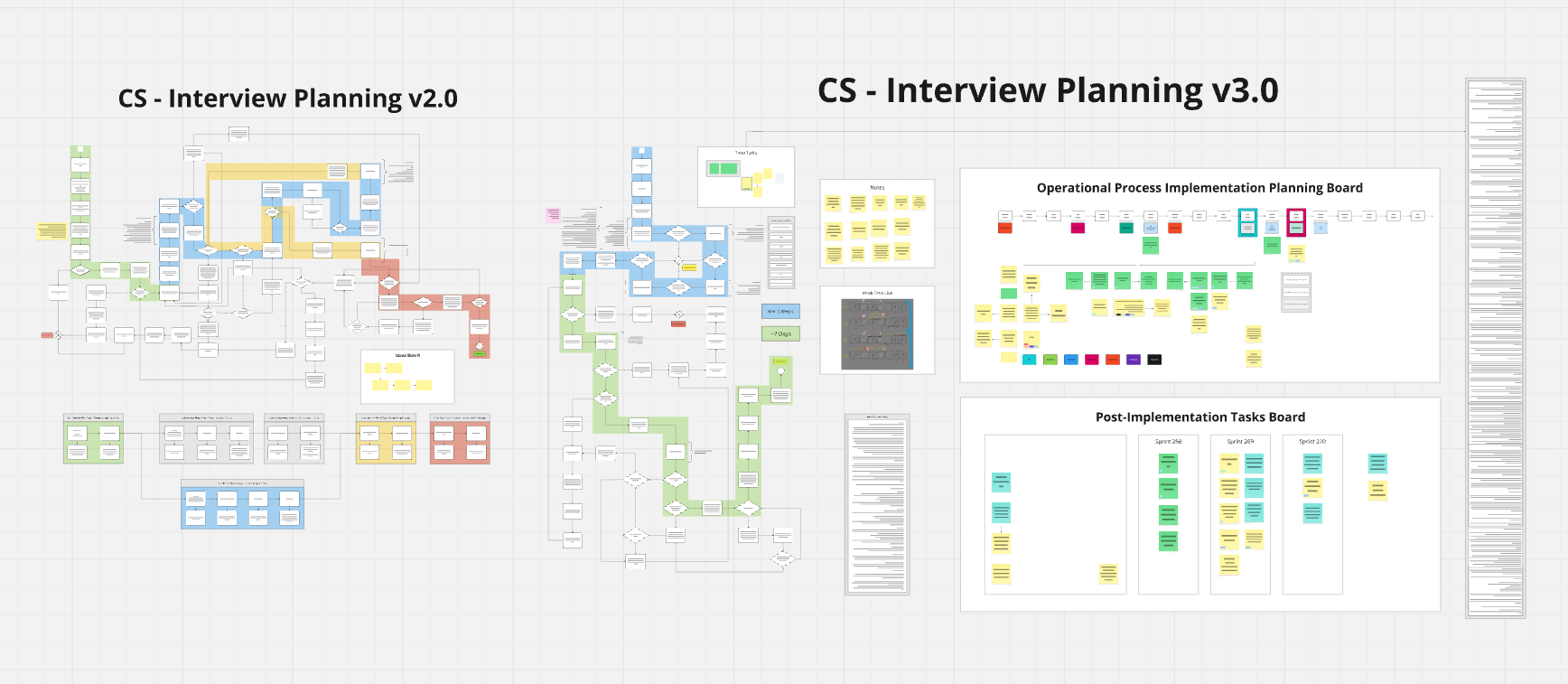
One of the biggest things we worked on during that period was completely redesigning the process for bringing new people into CS Internship.
The previous onboarding and admission process required a lot of time and effort from the team and had its own problems. In different meetings, we discussed how people should get familiar with the program, what stages they should go through, and how we could make sure that people joining actually understood what they were getting into.
After many discussions within the team, I took responsibility for designing the overall structure of the new process.
I designed the entire flow as a flowchart in Miro. I spent more than 20 hours just designing and building that structure, and afterward, I also worked on dividing up the responsibilities, coordinating the work, and following up on the implementation of its different parts.
The goal was to make the admission process require much less manual involvement while still having multiple stages of evaluation and filtering. These stages helped us bring in people who understood what CS was about, were genuinely interested in software engineering, and intended to stay and complete the program.
I also prepared onboarding videos, written materials, documentation, and other content for the new process, and eventually, we put it into practice.
The results were even better than we'd expected. The amount of time and effort needed to bring new people into the program dropped significantly, and applicants could get a much better understanding of the environment, the rules, and the journey they were about to begin before joining.
During that redesign, I also came up with an idea.
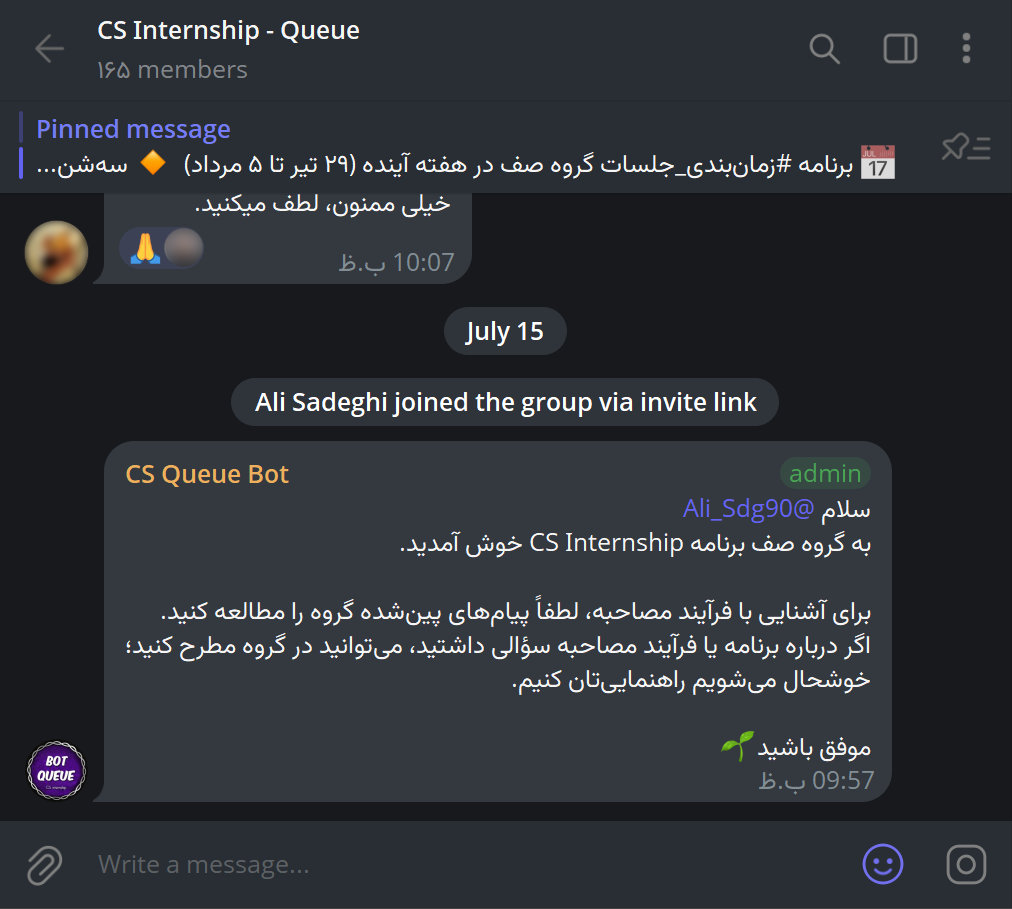
One of the tasks that was being handled manually in the waiting-list group could be automated with a Telegram bot. I brought the idea to the Governance team, and after discussing it, we decided to build it.
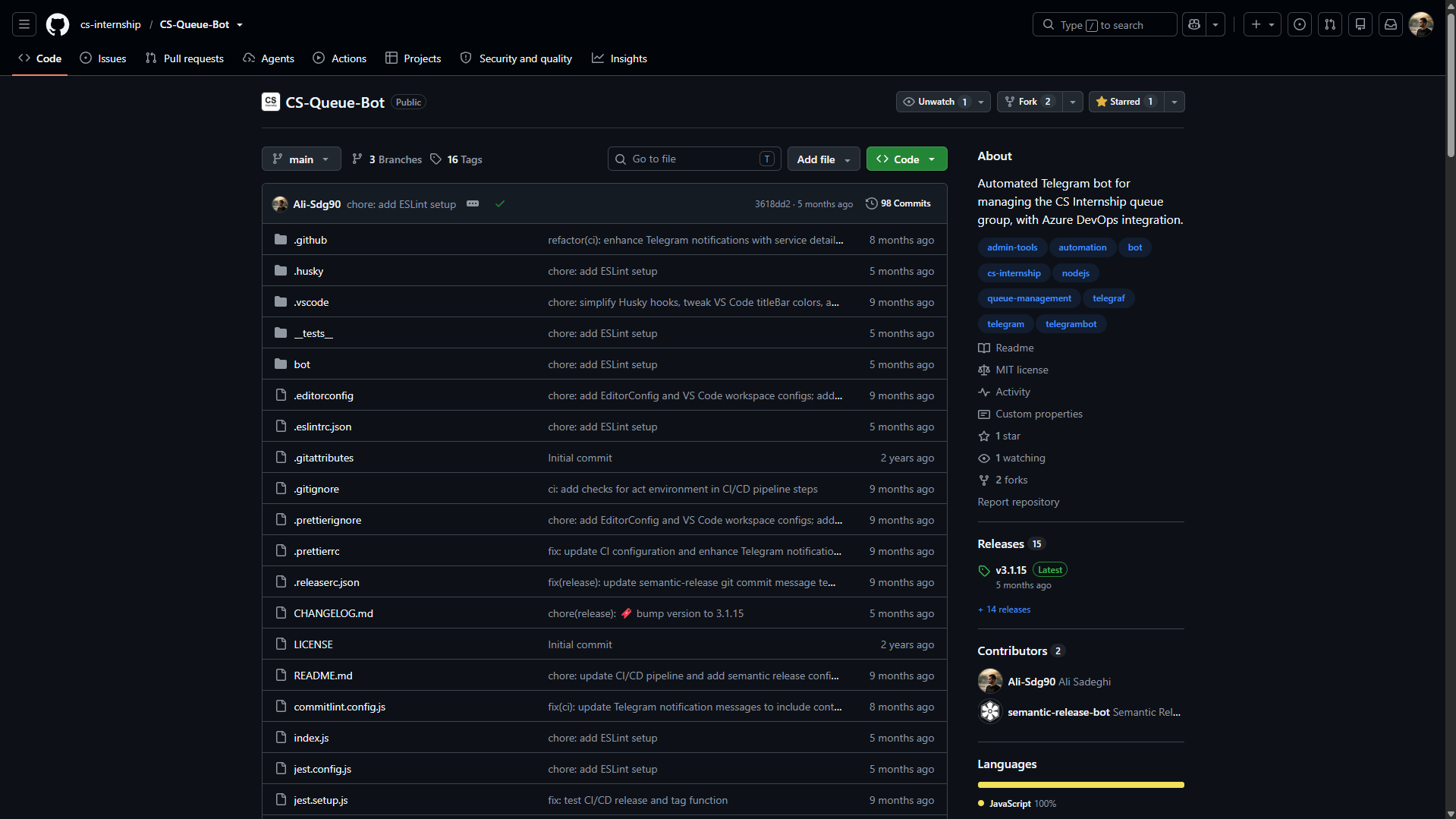
So I went ahead and implemented it, and that became the beginning of CS Queue Bot.
It was a bot designed to organize the waiting-list group and automate a large part of its work. It could even connect to the program's Azure DevOps environment. I wrote more about it in the CS Queue Bot card.
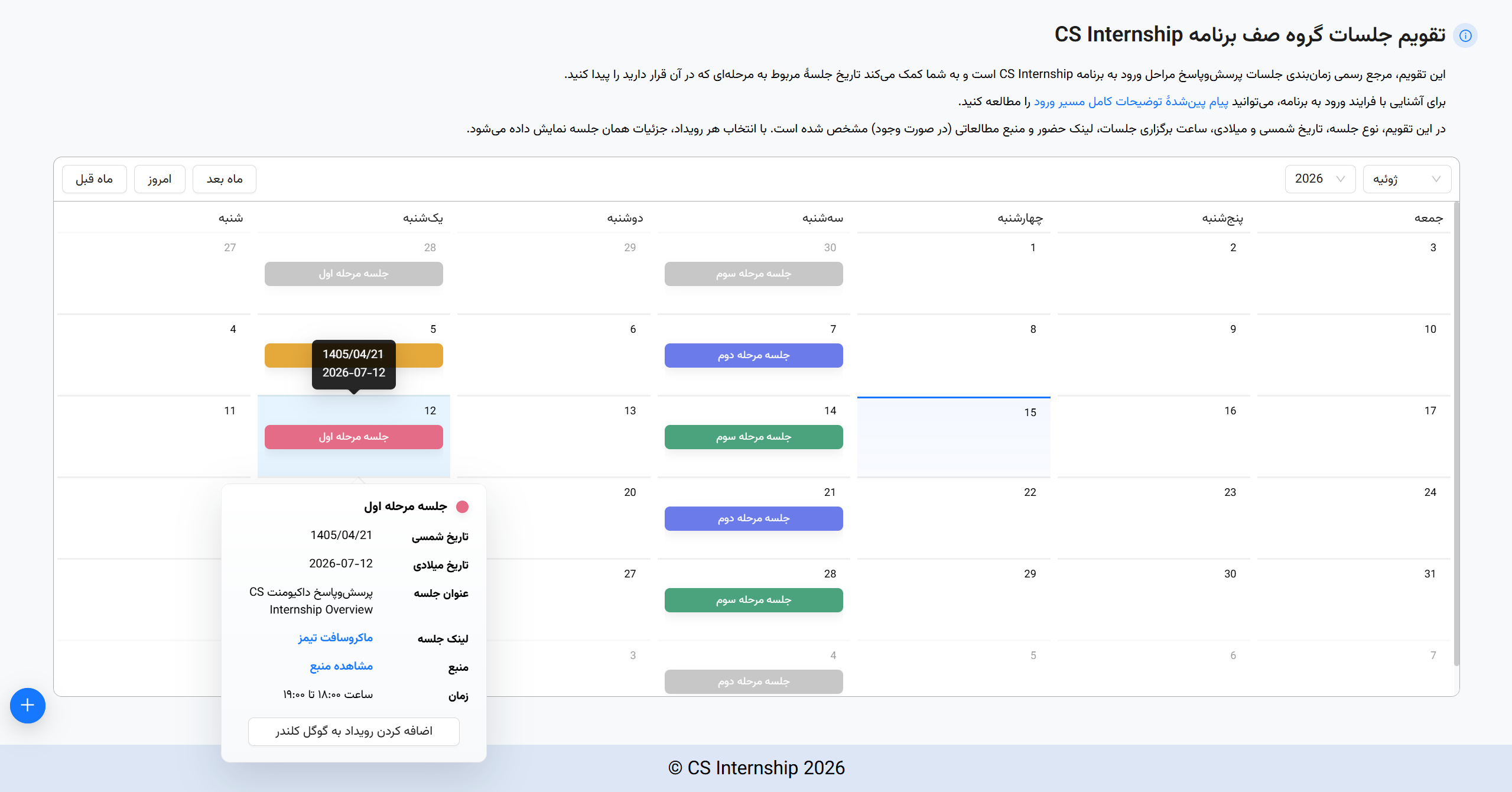
After introducing the new admission process, we also needed a calendar to show people when the waiting-list introduction sessions were scheduled.
At the time, I was also working with React and Ant Design at another company. When I saw that we needed something like this, I said I'd build it myself.
And that's how CS Queue Calendar started.
I spent a lot of time and attention building it, and it eventually became one of the program's main tools. I explained its development and technical details in its own project card.
Some time later, when AI tools were just starting to become more capable, another idea came to mind.
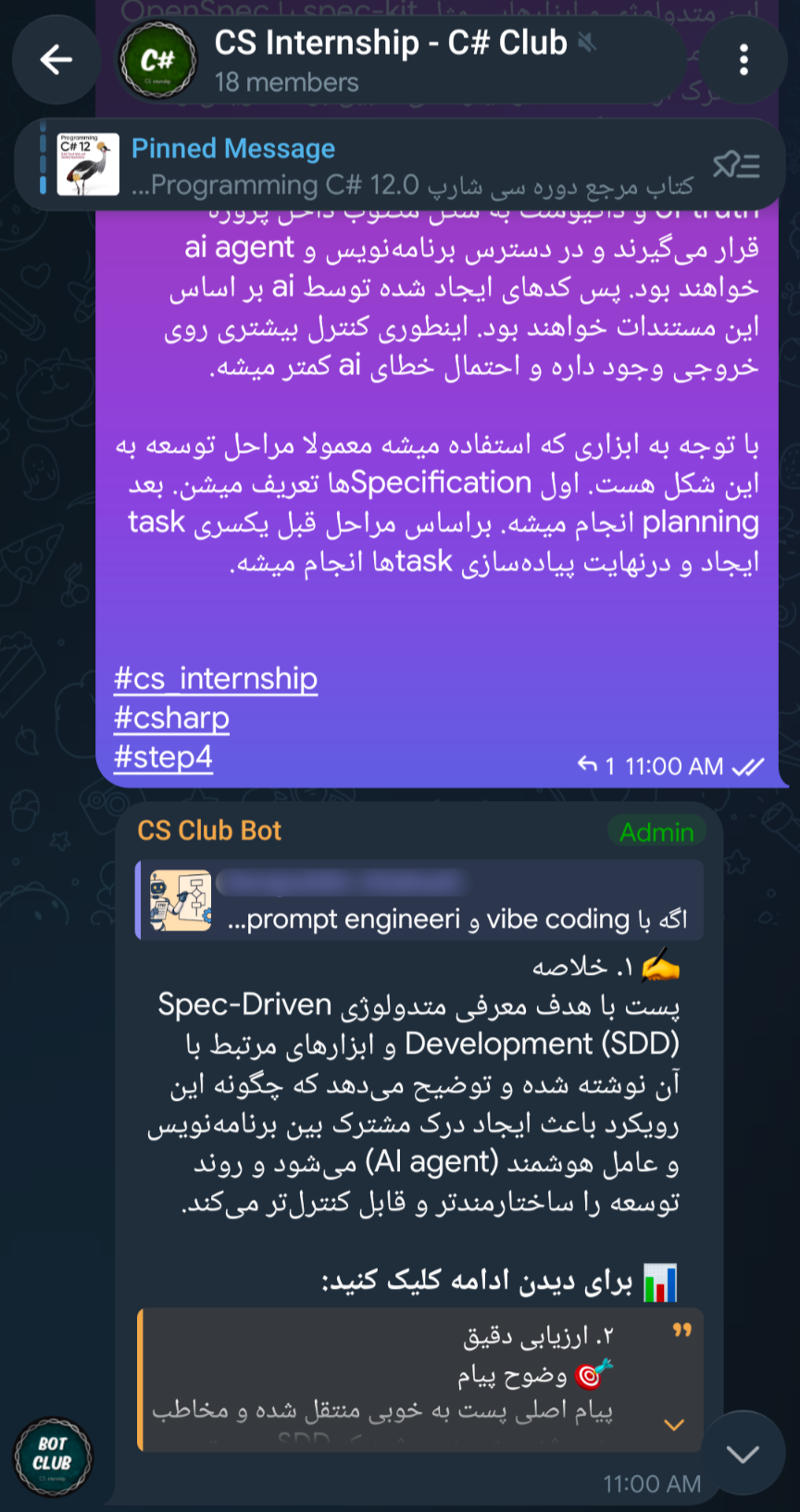
In CS, we had groups called Clubs where interns shared their posts and activities and interacted with each other. I thought it would be interesting to build a bot that could review interns' posts with AI and give them feedback.
That became CS Club Bot.
The bot would take the text of a post and use Perplexity AI to evaluate it from different perspectives, then give the intern a report about the post's quality and characteristics.
The project received really good feedback, and a few months later, I worked on it again and added more features. There's more about it in the CS Club Bot card.
Another tool I built during this period was CS Azure Board Automation.
Every week, the program needed new sprints, backlogs, tasks, and team members' capacities to be prepared in Azure DevOps. This was being done manually and took quite a bit of time from whoever was responsible for the sprint.
I built a web app that automated those tasks and reduced the time needed to prepare the board from around 30 minutes per week to approximately one minute.
The tool was used in the program for several months, but the Governance team later decided it would be better to stop using it.
Their reasoning was that automating the process might prevent team members from properly learning how to work with Azure Boards and manage sprints themselves. I personally disagreed with that decision, but it was a team decision, and we'd voted on it.
So I shut down the web app.
That was another part of working in a team. The final decision wasn't always going to be what I personally thought was best.
I also designed and implemented a Feedback System for the program.
The idea was to let people send feedback about a session to the person who had organized it. I built different parts of the system, including a webhook, database, Telegram bot, and the other pieces needed to make it work.
It received some good initial feedback, but it never reached regular use in the program because it happened around the same time I was starting to think about leaving CS.
During those years, I also built other tools like CS Queue Meetings Intro and CS Queue Message Maker. These were projects that came from noticing something missing in the program and realizing that a small tool could make certain tasks easier.
Many of these tools weren't assigned to me as tasks at all. I'd notice a need, think about it, and if I could come up with a good solution, I'd go ahead and build it.
My technical involvement wasn't limited to building tools either. For a while, I was responsible for following up on the CS System project. I created issues, tracked the work that needed to be delivered, and reviewed pull requests for that software.
Alongside all of this, a large part of my time went into managing the program's internal work, writing and updating documentation, reviewing documents, and coordinating between different people and teams.
One thing that mattered to me when building projects and systems for the program was knowing that I wouldn't always be around to maintain them. These were tools being added to CS, and other people might work on them, modify them, or use them years later.
So I tried to give them a good structure, tests, CI/CD, and proper documentation whenever possible, making them easier for other people to maintain and continue developing.
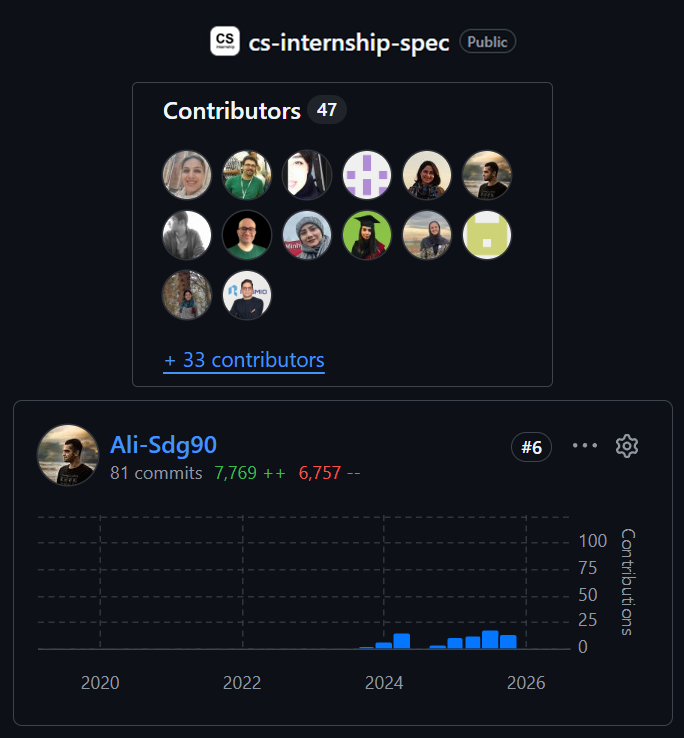
Almost all of these projects, their code, pull requests, and many of the documents I worked on are publicly available and open source in the CS GitHub Organization. If you're curious, you can find traces of a large part of my work there.
Another important part of CS for me was its volunteer nature.
Most of the people involved in managing and running the program were doing it because they wanted to. For many of them, helping others, improving the program, and learning new things were their main reasons for being there.
After I became a Candidate Mentor, one of the companies supporting the program also decided to sponsor me financially and pay me for the hours I spent working on CS. This was that company's own decision, not a general rule of the program that applied to everyone.
But what had brought me into this journey and kept me there from the beginning was my interest in the program itself and the work I was doing.
I think my role in CS was, more than anything, about building things, looking after people, and keeping a community alive.
On one side, I was working with interns and helping them through their journeys. On another, I was involved in managing the program and making decisions. And whenever I noticed the need for a new tool or system, I tried to use what I knew technically to build a solution for it.
Altogether, I spent around three years of my life at CS Internship.
I learned an incredible amount during those years: about technology, teamwork, management, and system design, but also about myself and how to communicate with different people.
I made a lot of friends, helped different people start and continue their technical journeys, built projects and tools for the program, and played a part in changing and improving many parts of its structure.
CS wasn't just an internship program to me. It was a big part of how I grew and figured out what I wanted to do in the future.
But every beginning has an ending.
After around three years, I decided to leave the program.
It was a really difficult and painful decision. CS had become one of the most important parts of my life, and helping it, looking after it, and trying to make it better had become part of how I defined myself.
But I'd reached a point where I felt I needed to step away and continue my journey somewhere else.
I don't regret that decision, just as I don't regret the time I spent on the program.
From the laughter and friendships to the disagreements, the heavy workloads, the long discussions, the decisions I didn't agree with, and the problems that sometimes seemed to lead nowhere, all of it was part of the experience.
I'm proud of the way I contributed during my time in the program—of the things I built, the people I worked with, and the impact I was able to have on some interns' journeys and on the program's future.
It means a lot to me that I left things behind in CS that can still be useful even after I've gone. Tools, documentation, processes, and changes that people joining years later might use without even knowing who I am.
In a way, little pieces of Ali are still there in the program.
CS Internship has definitely been one of the most important experiences of my professional journey, and I think it'll always remain an important part of my life too.
شهریور سال ۱۴۰۱ از طریق یکی از آشنایانم با برنامه CS Internship آشنا شدم.
اون موقع تازه یادگیری برنامهنویسی با C++ رو شروع کرده بودم و چندتا پروژه ساده هم باهاش ساخته بودم. یکی از مهمترینهاش Sea Battle بود که فکر میکنم نقش بزرگی تو رسیدنم به اینجا داشت.
برای ورود به برنامه ثبتنام کردم و وارد صف انتظار شدم. ولی اون موقع کار خاصی برای انجام دادن نداشتم و دوست نداشتم فقط منتظر بمونم. از اونجایی که مطالب آموزشی برنامه بهصورت اوپنسورس روی GitHub قرار داشتن، خودم رفتم سراغشون و شروع کردم به یاد گرفتن چیزهایی که قرار بود بعد از ورود به برنامه باهاشون مواجه بشم.
خودم مطالعه میکردم، پروژه میساختم، به کلی مشکل میخوردم و سعی میکردم حلشون کنم. عملا قبل از اینکه وارد برنامه بشم، داشتم مسیر آموزشیش رو بهصورت مستقل پیش میبردم.
حدود ۶ ماه گذشت و در ۲۸ اسفند ۱۴۰۱ بالاخره نوبت ورودم به برنامه رسید!
وقتی جلسه مصاحبه و ورودم برگزار شد، من از نظر یادگیری وسط استپ ۵ از ۱۲ استپ دوره وب بودم. یعنی بخش نسبتا زیادی از مسیر رو قبل از اینکه رسما عضو برنامه بشم، خودم پیش رفته بودم.
ورود به CS برای من یه تغییر بزرگ بود. تا قبل از اون تنهایی مطالعه میکردم، ولی حالا وارد یه اجتماع شده بودم که افراد مختلفی توش داشتن مسیر خودشون رو پیش میبردن. میتونستم با بقیه اینترنها آشنا بشم، کارهاشون رو ببینم، باهاشون صحبت کنم و هرجا سوال فنی داشتم از منتورهای برنامه کمک بگیرم.
یه قسمت دیگه برنامه هم بود که تاثیر خیلی زیادی روم گذاشت: ویدئوها و مطالب مربیگری و مهارتهای نرم.
این مطالب فقط درباره برنامهنویسی نبودن. درباره مشاهده خود، شناختن نوع بودنمون، ارتباط با آدمها و اینکه چجوری میتونیم آگاهانهتر درباره خودمون و چیزی که میخوایم باشیم فکر کنیم صحبت میکردن. این بخش از آموزشهای برنامه واقعا روی شخصیت و مدل فکر کردنم تاثیر گذاشت و هنوز هم خیلی از چیزهایی که اونجا یاد گرفتم برام ارزشمندن.
از اونجایی که قبل از ورودم تا وسط استپ ۵ جلو رفته بودم، حالا باید مراحل و فعالیتهای رسمی استپهای قبلی رو هم انجام میدادم تا به جایی که از نظر فنی رسیده بودم برسم.
اولین استپ برنامه، یعنی استپ صفر، یه کار عجیب ازمون میخواست!
برای اینکه یخمون تو محیط جدید باز بشه، باید با همه اینترنها و منتورهای برنامه جلسه هماهنگ میکردیم، باهاشون آشنا میشدیم و خودمون رو معرفی میکردیم.
این کار برای علی اون زمان فوقالعاده سخت بود. من اون موقع اصلا آدم راحتی برای ارتباط گرفتن با افراد جدید، باز شدن و نشون دادن شخصیتم نبودم. خیلی با چیزی که الان هستم فرق داشتم.
ولی خب، باید انجامش میدادم.
در نهایت با ۲۸ نفر جلسه گذاشتم و به زور تونستم این استپ رو تموم کنم! تازه زمان ورودم هم دقیقا نزدیک نوروز ۱۴۰۲ بود و هماهنگ کردن جلسه با این همه آدم تو تعطیلات خودش یه داستان جدا داشت.
بعد وارد استپ ۱ شدم و رکورد کوتاهترین زمان گذروندن این استپ تو تاریخ برنامه رو زدم. تو فقط ۷ روز تمومش کردم! باقی استپها رو هم نسبتا سریع پیش میبردم. مدت زمانی که تو هر استپ گذروندم رو تو پروژه CS Steps هم ثبت کردم.
همینجوری مسیر دوره وب رو جلو میرفتم، با آدمهای مختلف آشنا میشدم و برای خودم پروژه میساختم.
یه چیزی که از همون موقع خیلی برام مهم بود، کیفیت پروژههام بود. من دوست نداشتم صرفا یه چیزی بسازم که کار کنه و بتونم از اون استپ رد بشم. میخواستم خروجی تا جایی که از دستم برمیاد کامل، تمیز، خلاقانه و باکیفیت باشه.
هدفم یادگیری بود و دوست داشتم تو همین مسیر، تواناییهام رو به چالش بکشم و چیزی بیشتر از حداقل خواستهشده بسازم. پروژههایی مثل Todo App و Calculator از مهمترین چیزهایی بودن که اون زمان ساختم و هنوز هم بهشون افتخار میکنم.
تو همین دوره فعالیت تو شبکههای اجتماعی، مخصوصا Twitter و LinkedIn رو هم شروع کردم. یکی از فعالیتهای برنامه این بود که درباره مسیر یادگیری و کارهامون پست منتشر کنیم.
من سعی میکردم این کار رو فقط برای رد کردن یه مرحله انجام ندم. دوست داشتم چیزی که منتشر میکنم واقعا بازتاب خودم و کارهایی باشه که انجام دادم. یه چیزی که تیکهای از علی توش باشه و از منتشر کردنش احساس راحتی کنم.
بهمرور یه فضای اجتماعی هم برای خودم ساختم که میتونستم توش با آدمهای مختلف آشنا بشم و درباره چیزهایی که میساختم و یاد میگرفتم حرف بزنم.
از حدود استپ ۵، یعنی تقریبا ۵ ماه بعد از ورودم به برنامه، فعالیتم تو CS شکل جدیدی گرفت.
وارد تیم منتوری شدم و نقشم به کارآموز منتور تغییر کرد. اول کارهای نسبتا سادهای مثل برگزاری مسابقه تایپ هفتگی، بررسی گروه صف و پروفایلهای اینترنها رو انجام میدادم. کمکم داشتم با مدل مدیریت برنامه و مسئولیتهایی که پشتش بود آشنا میشدم.
تو CS هر اینترن یه نفر به اسم Coordinator داشت که مسئول همراهی و مدیریت مسیرش تو برنامه بود. از هماهنگی جلسات و پیگیری فعالیتها گرفته تا جواب دادن به سوالها و انجام یه سری کارهای مدیریتی مربوط به اون اینترن.
من هم از اول ورودم یه کوردینیتور داشتم، ولی حالا به جایی رسیده بودم که خودم میتونستم کوردینیتور اینترنهای جدید بشم!
این یکی از تغییراتی بود که براش خیلی هیجان داشتم.
فکر میکنم تو این مدت مسئول هماهنگی و پیگیری کارهای حدود ۱۵ اینترن مختلف بودم و ۸ نفرشون رو هم خودم آنبورد کردم. بیشترین تعداد افرادی که همزمان مسئولشون بودم به ۶ نفر میرسید.
من برای این افراد نقش ارتباطی بین خودشون و برنامه رو داشتم. اسنپهای جدید رو در اختیارشون میذاشتم، پروفایلهاشون رو آپدیت میکردم، سوالهاشون رو جواب میدادم و هماهنگی و مدیریت بعضی از جلساتشون رو به عهده داشتم.
این کار رو خیلی دوست داشتم. از اینکه میتونستم حالا خودم تو جایگاهی باشم که اینترنهای جدید رو راهنمایی کنم و حواسم به مسیرشون باشه لذت میبردم. من کلا دوست دارم از چیزها و آدمهایی که برام مهم هستن مراقبت کنم و این نقش خیلی با این بخش از شخصیتم جور بود.
تو همین دوره هم بهعنوان کارآموز وارد شرکت ملکرادار شده بودم و همزمان داشتم تجربه کار کردن تو یه تیم واقعی نرمافزاری رو به دست میآوردم.
حدود ۵ ماه تو نقش کوردینیتور فعالیت کردم و بعد از اینکه دوره وب رو تو مجموع ۱۰ ماه تموم کردم، نقش جدیدی گرفتم: منتور فنی دوره وب.
حالا دیگه میتونستم برای اینترنهای دوره جلسات فنی برگزار کنم و تو مسیر یادگیریشون راهنماییشون کنم.
یه زمان ثابت تو هفته مشخص میکردم و اینترنهایی که نیاز داشتن میتونستن برای اون جلسه رزرو کنن. تو جلسات سوالها و مشکلاتشون رو مطرح میکردن، پروژههاشون رو برای ریویو میآوردن و من هم پستها، گزارشهای هفتگی و کارهای فنیشون رو بررسی میکردم.
اولش برای این مسئولیت استرس داشتم، ولی بعد از چند جلسه خیلی باهاش راحت شدم.
تو مدت منتورینگم بیش از ۳۰ جلسه فنی برگزار کردم. بعضی جلسات چند نفره بودن، بعضیها هم با تعداد کمتر برگزار میشدن و معمولا حدود یه ساعت طول میکشیدن.
من تو این نقش معلم اینترنها نبودم. قرار نبود بهشون تکلیف بدم یا مراقب باشم حتما کاری رو انجام بدن. بیشتر میخواستم کسی باشم که هرجا به مشکل خوردن، بتونن ازش کمک بگیرن و راهنمایی بخوان.
برای جلساتم یه Repository هم ساخته بودم که کدها، مثالها و چیزهایی که تو هر جلسه بررسی میکردیم رو تو برنچهای جدا نگه میداشتم. توضیحات بیشتر درباره این جلسات و ریپوی وایتبردم رو تو کارت Interns Mentored in Web Development نوشتم.
از یه طرف داشتم تجربه فنی و کاری بیشتری به دست میآوردم و از طرف دیگه میتونستم تو مسیر یادگیری بقیه هم نقش داشته باشم.
حدود ۶ ماه بعد، تصمیم گرفتم مسئولیتم تو برنامه بیشتر بشه و وارد نقش Candidate Mentor بشم.
این نقش با نقشهای قبلی خیلی فرق داشت.
تا قبل از اون بیشتر مسئولیتم مربوط به اینترنها، دوره وب و کارهای مشخص برنامه بود. ولی تو نقش جدید، افراد مستقیما تو مدیریت، ساختار و تصمیمگیریهای اصلی CS مشارکت میکردن.
من حدود ۴ ماه قبل از اینکه وارد این نقش بشم، داوطلبانه تو جلسات هفتگی تیم Governance شرکت میکردم. البته اون موقع فقط شنونده بودم. میخواستم ببینم منتورها و تصمیمگیرندههای برنامه چجوری جلسه برگزار میکنن، درباره مسائل مختلف چجوری فکر میکنن و به تصمیم مشترک میرسن.
بعد از اینکه نقشم به Candidate Mentor تغییر کرد، حالا خودم هم میتونستم بهعنوان عضوی از تیم تو این جلسات حاضر بشم و تو تصمیمگیریها نقش داشته باشم.
خیلی زود متوجه شدم که این بخش از کار تو CS رو حتی بیشتر از نقشهای قبلیم دوست دارم.
تا قبل از اون بیشتر حواسم به رشد و مسیر فنی اینترنها بود، ولی حالا میتونستم روی خود برنامه کار کنم. اینکه ساختارش چجوری باشه، چه قوانینی داشته باشه، مشکلاتش چجوری حل بشن و چه تغییراتی لازمه تا بهتر و منظمتر کار کنه.
برای من این نقش یه جور فرصت برای ساختن و مراقبت کردن تو مقیاس بزرگتر بود. دیگه فقط درباره چندتا اینترن یا دوره وب نبود؛ درباره کل برنامه و آیندهش بود.
از همون اوایل همراه دو نفر دیگه یه تیم تشکیل دادیم و دوره وب رو بازبینی و بازطراحی کردیم. سعی کردیم ساختار دوره رو کاملتر کنیم و مشکلات و نیازهایی که تو مسیرش دیده بودیم رو برطرف کنیم.
بعد از اون وارد کار روی بخشهای دیگه برنامه شدیم. از تعریف مجدد نقشها و پیشنیازهاشون گرفته تا بازطراحی نحوه فعالیت اینترنها، بررسی مشکلات و Edge Caseهای قوانین برنامه، بهروزرسانی داکیومنتها و تصمیمگیریهای مختلفی که برای مدیریت روزمره CS لازم بود.
بهمرور قسمت بزرگی از فعالیتم تو برنامه به طراحی و بازطراحی سیستمها، قوانین و فرایندها تبدیل شد.
بعدتر تیم دیگهای هم به اسم CS 3.0 تشکیل شد.
هدف این تیم بیشتر فکر کردن به آینده برنامه، تعریف Vision و تصمیمگیریهای بلندمدت بود. من از همون ابتدای تشکیل تیم واردش شدم و حدود یک سال و نیم عضو فعالش بودم. این تیم هم جلسات هفتگی خودش رو داشت و توش روی مسائل مختلف برنامه کار میکردیم.
یکی از بزرگترین کارهایی که تو این دوره انجام دادیم، بازطراحی کامل فرایند ورود افراد جدید به CS Internship بود.
مدل قبلی ورود به برنامه زمان و انرژی زیادی از تیم میگرفت و مشکلات خودش رو داشت. تو جلسات مختلف درباره این صحبت میکردیم که افراد چجوری باید با برنامه آشنا بشن، چه مراحلی رو بگذرونن و چطور مطمئن بشیم کسایی که وارد میشن، واقعا میدونن قراره وارد چه مسیری بشن.
بعد از بحثهای زیادی که تو تیم داشتیم، من مسئول طراحی ساختار کلی فرایند جدید شدم.
کل مسیر رو تو Miro بهصورت فلوچارت طراحی کردم. بیش از ۲۰ ساعت فقط برای طراحی و پیادهسازی این ساختار وقت گذاشتم و بعد هم تقسیم کارها، هماهنگیها و پیگیری اجرایی شدن بخشهای مختلفش رو جلو بردم.
هدف این بود که فرایند ورود با نیاز به دخالت دستی خیلی کمتر انجام بشه و در عین حال چند مرحله بررسی و فیلترینگ داشته باشه. این مراحل کمک میکردن افرادی وارد برنامه بشن که هم با ماهیت CS آشنا هستن، هم واقعا به مسیر مهندسی نرمافزار علاقه دارن و قصد دارن دوره رو ادامه بدن.
برای این فرایند ویدئوهای آنبوردینگ، متنها، داکیومنتها و مطالب مختلفی هم آماده کردم و در نهایت مدل جدید رو تو برنامه اجرایی کردیم.
نتیجه از چیزی که انتظار داشتیم هم بهتر بود. هم هزینه زمانی و اجرایی ورود افراد خیلی کمتر شد، هم افراد قبل از ورود شناخت خیلی کاملتری از محیط، قوانین و مسیری که قرار بود شروع کنن پیدا میکردن.
تو همین بازطراحی یه ایده هم مطرح کردم.
یکی از کارهایی که تو گروه صف بهصورت دستی انجام میشد رو میتونستیم با یه بات تلگرام خودکار کنیم. ایده رو تو تیم Governance مطرح کردیم و بعد از بررسی، تصمیم گرفتیم بسازیمش.
من هم رفتم سراغ پیادهسازیش و این شد شروع پروژه CS Queue Bot.
باتی که برای نظم دادن به گروه صف و خودکار کردن بخش زیادی از کارهای اون ساخته شد و حتی به Azure DevOps برنامه هم وصل میشد. توضیحات کاملتر این پروژه رو تو کارت CS Queue Bot نوشتم.
بعد از اجرای مدل جدید ورود، نیاز به یه تقویم هم داشتیم که زمان جلسات معارفه گروه صف رو به افراد نشون بده.
اون موقع همزمان تو یه شرکت دیگه با React و Ant Design کار میکردم. وقتی دیدم این نیاز وجود داره، گفتم خودم برنامهش رو میسازم.
این شد پروژه CS Queue Calendar.
برای ساختش وقت و دقت زیادی گذاشتم و در نهایت تبدیل به یکی از ابزارهای اصلی برنامه شد. داستان ساختش و جزئیات فنیش رو هم تو کارت خودش توضیح دادم.
یه مدت بعد، وقتی ابزارهای هوش مصنوعی تازه داشتن تواناییهای جالبتری پیدا میکردن، یه ایده دیگه به ذهنم رسید.
تو CS گروههایی به اسم Club داشتیم که اینترنها پستها و فعالیتهاشون رو توش منتشر میکردن و با هم تعامل داشتن. فکر کردم میشه یه بات ساخت که پستهای اینترنها رو با کمک هوش مصنوعی بررسی کنه و بهشون بازخورد بده.
این شد CS Club Bot.
بات متن پست رو میگرفت و با کمک هوش مصنوعی Perplexity از چند جنبه مختلف بررسیش میکرد و یه گزارش از کیفیت و ویژگیهای پست به اینترن میداد.
این پروژه بازخوردهای خیلی خوبی گرفت و چند ماه بعد هم دوباره روش کار کردم و قابلیتهاش رو بیشتر کردم. توضیحات کاملترش تو کارت CS Club Bot هست.
یکی دیگه از ابزارهایی که تو این مسیر ساختم CS Azure Board Automation بود.
تو برنامه هر هفته باید Sprintهای جدید، Backlogها، تسکها و Capacityهای اعضای تیم تو Azure DevOps آماده میشدن. این کار بهصورت دستی انجام میشد و وقت نسبتا زیادی از مسئول Sprint میگرفت.
من یه وباپ ساختم که این کارها رو بهصورت خودکار انجام میداد و زمان آماده کردن بورد رو از حدود ۳۰ دقیقه در هفته به تقریبا ۱ دقیقه رسوند.
این ابزار چند ماه تو برنامه استفاده شد، ولی بعد تیم Governance تصمیم گرفت که بهتره دیگه ازش استفاده نکنیم.
دلیلش این بود که خودکار شدن این کار ممکن بود باعث بشه اعضای تیم کمتر با نحوه کار کردن با Azure Board و مدیریت Sprint آشنا بشن. من شخصا با این تصمیم موافق نبودم، ولی تصمیم تیمی بود و دربارهش رایگیری شده بود.
برای همین وباپ رو خاموش کردم.
این هم یکی از تجربههای کار گروهی بود. قرار نبود همیشه تصمیم نهایی همون چیزی باشه که من فکر میکنم بهتره.
برای برنامه یه Feedback System هم طراحی و پیادهسازی کردم.
هدف این سیستم این بود که افراد بتونن بعد از جلسات، بازخوردشون رو درباره جلسه برای برگزارکننده بفرستن. برای پیادهسازیش از Webhook، دیتابیس، بات تلگرام و بخشهای مختلف دیگه استفاده کردم.
بازخوردهای اولیه خوبی هم گرفت، ولی در نهایت به استفاده عملی تو برنامه نرسید. چون تقریبا همزمان شده بود با دورهای که داشتم برای خروج از CS تصمیم میگرفتم.
تو این مدت ابزارهای دیگهای مثل CS Queue Meetings Intro و CS Queue Message Maker هم ساختم. اینها هم از پروژههایی بودن که تو زمانهای مختلف احساس میکردم نبودشون تو برنامه حس میشه و میشه با ساخت یه ابزار کوچیک، بخشی از کارها رو راحتتر کرد.
خیلی از این ابزارها اصلا بهعنوان یه تسک به من سپرده نشده بودن. خودم نیاز رو میدیدم، دربارهش فکر میکردم و اگه راهحل مناسبی به ذهنم میرسید، میرفتم سراغ ساختنش.
فعالیت فنی من هم فقط به ساخت این ابزارها محدود نبود. یه دوره مسئول پیگیری کارهای پروژه CS System بودم، براش Issue تعریف میکردم، کارها رو برای تحویل پیگیری میکردم و Pull Requestهای اون پروژه رو هم بررسی میکردم.
در کنار اینها، بخش زیادی از وقتم صرف مدیریت کارهای داخلی برنامه، نوشتن و بهروزرسانی داکیومنتها، ریویو کردن مستندات و هماهنگی بین افراد و تیمهای مختلف میشد.
یکی از چیزهایی که تو ساخت پروژهها و سیستمهای برنامه برام مهم بود، این بود که قرار نبود همیشه خودم بالای سرشون باشم. اینها ابزارهایی بودن که به CS اضافه میشدن و ممکن بود سالها بعد افراد دیگهای روشون کار کنن، تغییرشون بدن یا ازشون استفاده کنن.
برای همین سعی میکردم تا جایی که میتونم ساختار مرتب، تستها، CI/CD و مستندات مناسبی براشون داشته باشم تا نگهداری و ادامه دادنشون برای بقیه راحتتر باشه.
تقریبا همه این پروژهها، کدها، Pull Requestها و خیلی از داکیومنتهایی که روشون کار کردم بهصورت اوپنسورس روی GitHub Organization برنامه قرار دارن. اگه کنجکاو باشین، میتونین ردپای بخش بزرگی از کارهام رو اونجا ببینین.
یه بخش مهم دیگه CS هم برای من ماهیت داوطلبانهش بود.
بیشتر آدمهایی که تو مدیریت و پیش بردن برنامه نقش داشتن، از روی علاقه و انتخاب خودشون این کار رو انجام میدادن. برای خیلیهاشون کمک کردن به بقیه، رشد دادن برنامه و یاد گرفتن چیزهای جدید دلیل اصلی حضورشون بود.
بعد از اینکه وارد نقش Candidate Mentor شدم، یکی از شرکتهای پشتیبان برنامه هم تصمیم گرفت بهصورت مالی اسپانسرم بشه و بابت ساعتهایی که برای برنامه کار میکردم بهم پرداخت داشته باشه. این حمایت تصمیم خود اون شرکت بود و جزو قوانین عمومی CS نبود که برای همه اعضا اتفاق بیفته.
ولی چیزی که باعث شده بود وارد این مسیر بشم و توش بمونم، از اول علاقهم به خود برنامه و کارهایی بود که توش انجام میدادم.
فکر میکنم نقشی که تو CS داشتم، بیشتر از هر چیزی درباره ساختن، مراقبت کردن و زنده نگه داشتن یه کامیونیتی بود.
از یه طرف با اینترنها در ارتباط بودم و تو مسیرشون راهنماییشون میکردم، از یه طرف تو تصمیمگیریها و مدیریت برنامه نقش داشتم و از طرف دیگه هرجا نیاز به یه ابزار یا سیستم جدید میدیدم، سعی میکردم با دانش فنیای که داشتم براش راهحلی بسازم.
در مجموع حدود ۳ سال از زندگیم رو تو CS Internship گذروندم.
تو این مدت چیزهای خیلی زیادی یاد گرفتم. هم از نظر فنی، هم از نظر کار گروهی، مدیریت و طراحی سیستمها و هم از نظر شناخت خودم و ارتباط برقرار کردن با آدمهای مختلف.
دوستهای زیادی پیدا کردم، به افراد مختلفی تو شروع و ادامه مسیر فنیشون کمک کردم، پروژهها و ابزارهای مختلفی برای برنامه ساختم و تو تغییر دادن و بهتر کردن بخشهای زیادی از ساختارش نقش داشتم.
CS برای من فقط یه برنامه کارآموزی نبود. بخش بزرگی از مسیر رشد و پیدا کردن چیزی بود که دوست داشتم تو آینده انجام بدم.
ولی هر شروعی یه پایان هم داره.
بعد از حدود ۳ سال تصمیم گرفتم از برنامه خارج بشم.
این تصمیم برام خیلی سخت و دردناک بود. CS یکی از مهمترین بخشهای زندگیم شده بود و کمک کردن بهش، مراقبت ازش و تلاش برای بهتر شدنش، بخشی از تعریفی بود که از خودم داشتم.
ولی به این نتیجه رسیده بودم که لازمه ازش فاصله بگیرم و مسیرم رو جای دیگهای ادامه بدم.
از این تصمیم پشیمون نیستم، همونطور که از وقتی که برای برنامه گذاشتم هم پشیمون نیستم.
از خندهها و دوستیها گرفته تا دلخوریها، حجم زیاد کارها، بحثهای طولانی، تصمیمهایی که باهاشون موافق نبودم و مسئلههایی که گاهی به بنبست میخوردن، همهشون بخشی از این تجربه بودن.
من از نحوهای که تو این مدت تو برنامه حضور داشتم راضیام. از چیزهایی که ساختم، از آدمهایی که باهاشون کار کردم و از تاثیری که تونستم روی مسیر بعضی از اینترنها و آینده برنامه بذارم.
برام ارزشمنده که چیزهایی از خودم تو CS باقی گذاشتم که حتی بعد از خروج من هم میتونن استفاده بشن. ابزارها، داکیومنتها، فرایندها و تغییراتی که شاید آدمهایی که سالها بعد وارد برنامه میشن ازشون استفاده کنن، بدون اینکه حتی من رو بشناسن.
یه جورایی تیکههایی از علی تو این برنامه باقی موند.
CS Internship قطعا یکی از مهمترین تجربههای کاری من بوده و فکر میکنم همیشه یکی از بخشهای مهم زندگیم هم باقی میمونه.
Ask ChatGPT
Get a summary or ask questions about this page.
Related links
- GitHub RepositoryCS Queue Calendar
- GitHub RepositoryCS Club Bot
- GitHub RepositoryCS Queue Bot
- GitHub RepositoryCS Feedback Webhook
- GitHub RepositoryCS Queue Message Maker
- Learning RepositoryMy CS Steps
- YouTube WorkshopFrontend Workshop
- YouTube TutorialAzure DevOps Tutorial
- GitHub RepositoryCS Azure Board Automation
- Program RepoCS Internship Specification